


ROTATING MIRRORS
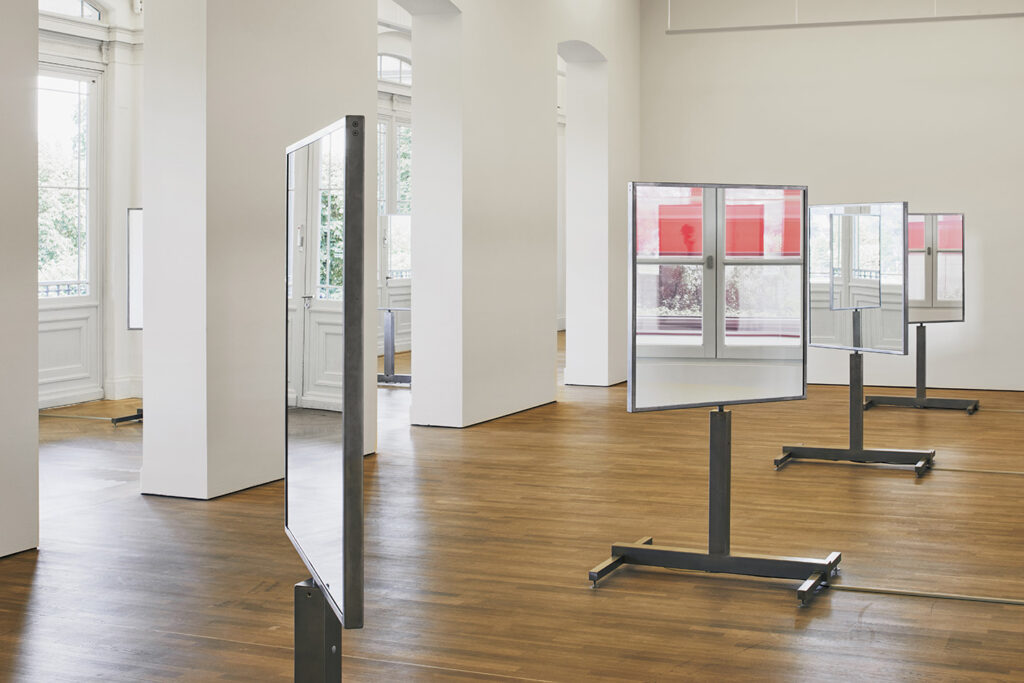
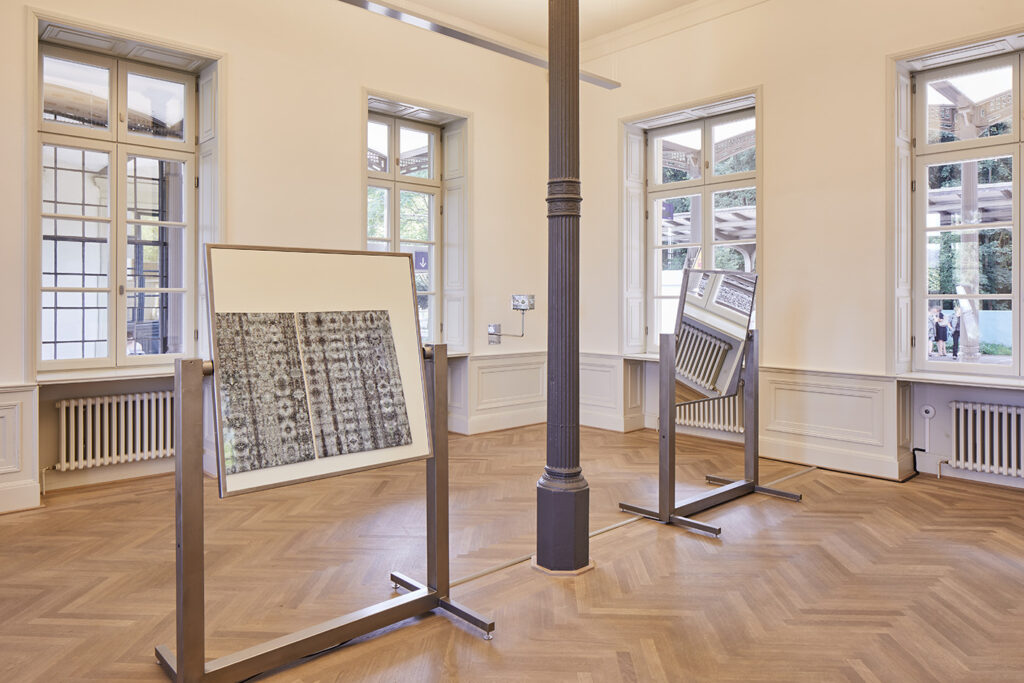
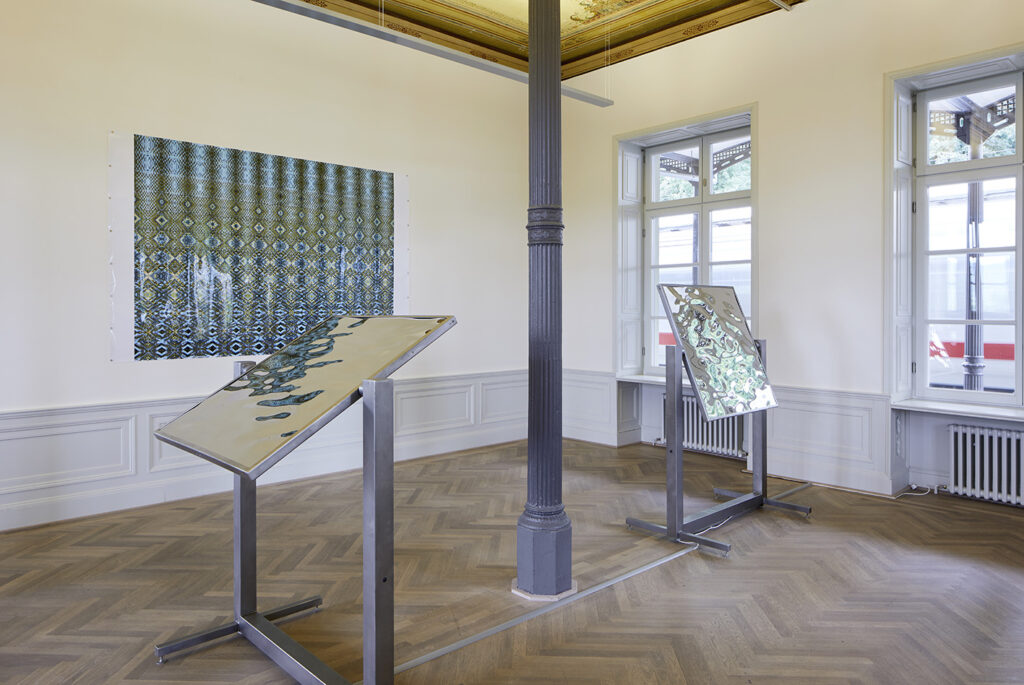
12 vertical and 6 horizontal rotating mirrors triggered by body motion
Each 200 x 100 x 10cm, Installation view:
Arp Museum, Landesmuseum Rheinland-Pfalz, Bahnhof Rolandseck
Excerpt from a text of Michaela Ott, Image Dividuation, 2017
Werner Klotz is an artist who plays with the contrary movement, at varying speeds, of contemporary transport and transference media and their processes of reflection.
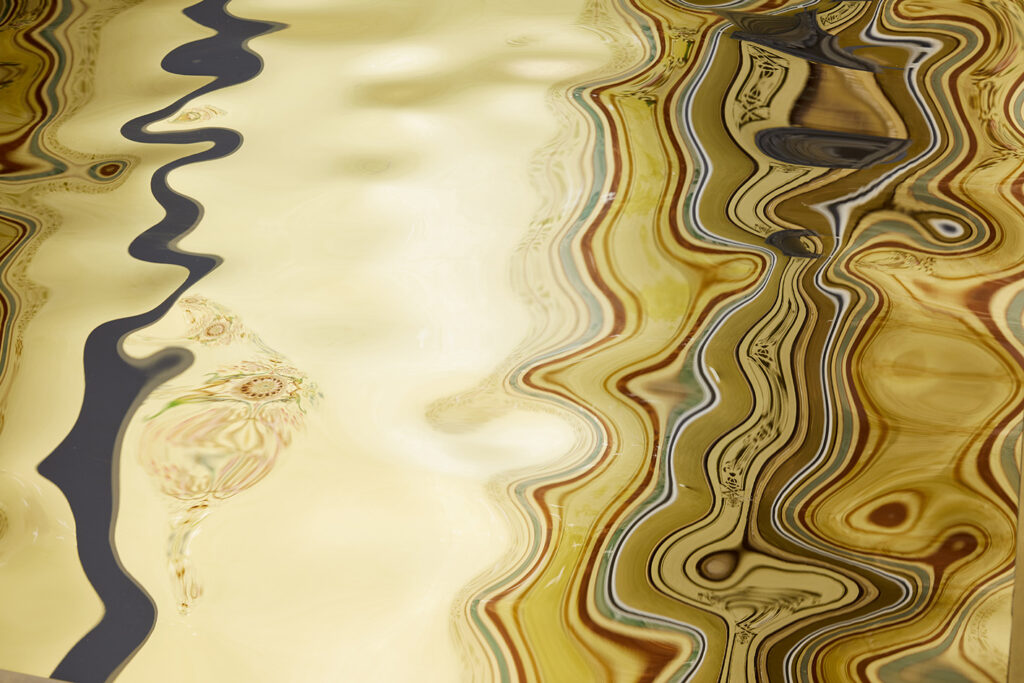
After all, his exhibition Das Auge ist ein seltsames Tier. Fotografien und Wahrnehmungsinstrumente von Werner Klotz (The Eye Is a Strange Animal: Photographs and Perception Instruments of Werner Klotz) at the Arp Museum, Rolandseck railway station, is primarily characterised by a venue located between two thoroughfares and time vectors: the railway track and the watercourse of the Rhine. Of themselves, the vessels that traverse them lend the exhibition rooms, which feature windows on both sides, a special quality of mobility and a curious speed-dependent displacement. This is further emphasised by the 15 mirrors set up within the space, which, depending upon their orientation, transfer the specific exterior motion into the interior, together with light, cloud, and hill motions, repeating sections of them and projecting a different motion against the reflection. The diversity of the captured and partially overlapping images concentrates the spatial architecture, which begins to fragment and to multiply, to shine, and to grow beyond themselves. This, however, is not all. Additionally, the mirrors – and the whole exhibition display – can be moved by the viewers, who place the mirrors in motion: thanks to integrated sensors, they react to anyone approaching them, turning vertically on their axis or swivelling horizontally, giving the spaces different dimensions. Like rows of mechanical, remote-controlled ballerinas, they subject the central main room to a continuously modifying choreography: image sequences that depend upon their rotation cross their stainless steel surfaces, continuing, time-displaced, in other mirrors, embedding mobile squares or inner windows into the spaces. These “rotating mirrors” produce a spatiotemporal fabric that contains the world, a chronotopia whose pages open slowly and contemplatively.